
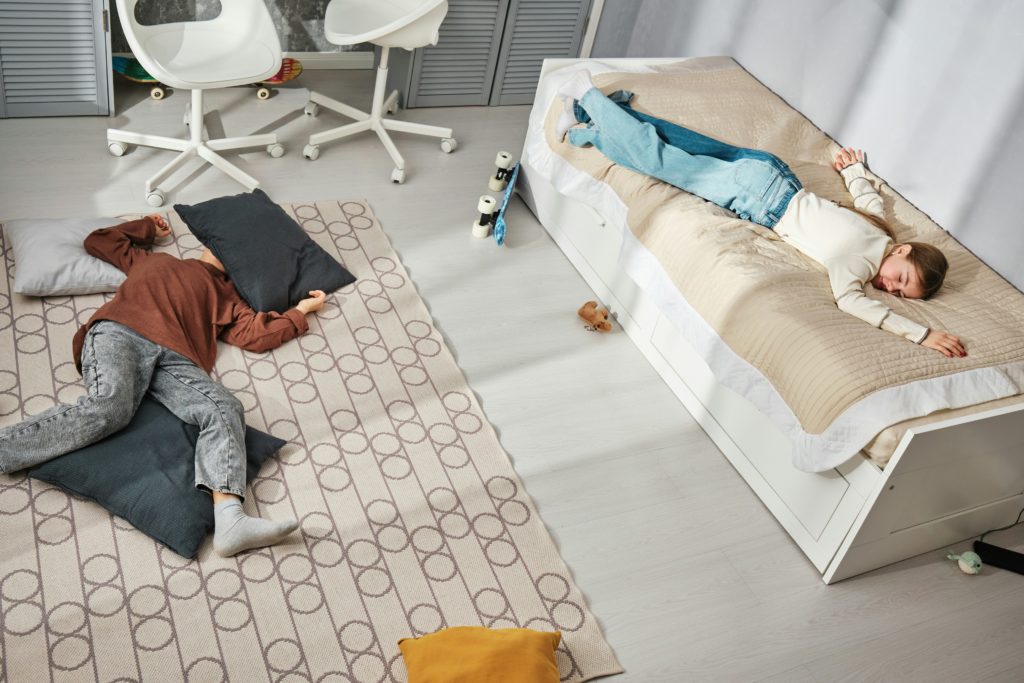
We do not all sleep the same way. Some people stay on their back all night, others prefer sleeping on their side, while some change positions regularly. This habit directly affects mattress selection. The level of support, surface comfort, and pressure distribution must adapt to the posture maintained for several hours. Understanding this connection helps you make a more consistent choice and reduce tension upon waking.
Sleeping on your back: choose balanced support
Back sleeping is often considered stable for the spine. It still requires support that maintains the natural curve of the lower back without creating excessive arching.
A mattress that is too soft can allow the hips to sink too deeply. A mattress that is too firm may fail to adapt to the body’s natural curves. The goal is balanced support that keeps the spine in a neutral position.
People who mainly sleep on their back often prefer a firm to medium feel, with solid support in the center of the mattress.
Sleeping on your side: reduce pressure points
Side sleeping is very common. It concentrates body weight on the shoulders and hips. The mattress must allow these areas to sink slightly to preserve spinal alignment.
A surface that feels too firm can create tension at the shoulders. Support that feels too soft can misalign the pelvis. A mattress with medium to slightly softer surface comfort combined with deeper support often suits side sleepers.
This position requires a precise balance between cushioning and stability.
Sleeping on your stomach: pay attention to support
Stomach sleeping places more strain on the lower back. If the hips sink too much, the natural curve increases and may create tension.
A mattress with firmer support limits this sinking and promotes better alignment. This position places higher demands on spinal support and requires careful attention when choosing a mattress.
Identifying your dominant sleeping position helps you select the appropriate firmness level.
What if you change positions frequently?
Some people naturally alternate between positions during the night. In this case, a medium comfort level often works well. It provides enough adaptability across different postures without creating major imbalance.
Body type and weight also influence how support feels. Two people sleeping in the same position may experience the same mattress differently.
Why testing your sleeping position in store makes a difference
Lying down for several minutes in your usual position allows you to immediately check spinal alignment. Observing how your shoulders and hips sink helps determine whether the support fits your needs.
Testing a mattress in different positions provides a clearer understanding of how it performs. This practical step simplifies the decision and reduces hesitation.
Choosing a mattress based on your sleeping position guides you toward comfort that remains consistent over time. Taking the time to assess these factors in real conditions turns a theoretical preference into an informed decision.
To refine your choice further, you can also review guidance on selecting between a firm or soft mattress and define your ideal level of support.